The Gap Between Knowing and Doing
Why understanding your patterns doesn’t automatically lead to change (and how therapy can help).
Let’s be clear: awareness is the first step toward change. You can’t fix something you can’t even see. And once you see the patterns, it helps to have an understanding of where they came from, what they were useful for, and why they’re sticking around. But awareness and understanding aren’t enough to make things change on their own. You have to use the knowledge you gather to create the smaller changes that add up to something different for your life. And those changes need to be maintained over time. If you fall back into old habits, the old problems can come back too.
That maintenance can be the hardest part. We often want a solution that fixes things once and for all, which is why it can be tempting to try flashy new techniques that promise permanent change. And some people really do find permanent solutions! There are some issues that do resolve for good- usually ones that started recently, haven’t integrated into our identity or personality, and aren’t reinforced by positive benefits. The opposite holds true as well. Long-term issues, especially ones stemming from childhood, are often difficult to change. Problems that have developed into habits, identity, or personality traits can be difficult even to see unless others point them out or we start feeling the consequences. And anything that brings a benefit is difficult to want to change even if we know it’s causing trouble.
Therapy can help with all three of these stages of change: seeing that there is something wrong, understanding the patterns, and figuring out what needs to be different to resolve the problems.
Getting visibility on what’s wrong
The Johari window is a cognitive psychology tool used to illustrate the limits of our own knowledge.
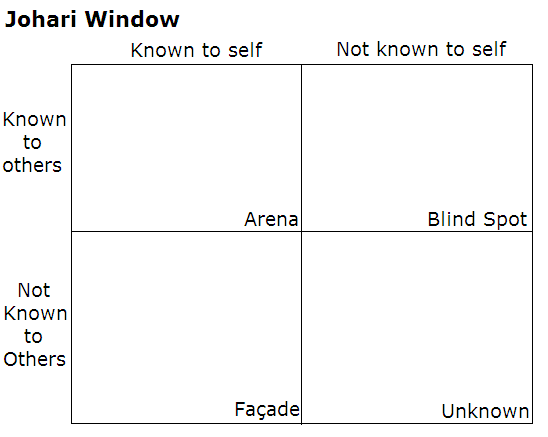
Image source: Wikipedia
Self-work can help you with things on the left side of the square. Therapy can help you with things in the top row as well as things on the bottom left that you are willing to share in a safe, confidential space. And ideally, increasing your knowledge through self-work and therapy will minimize the amount of important data about your thoughts, feelings, and motivations in the bottom right window.
Understanding complex dynamics is a process of ongoing exploration
What I mean by that is that understanding can take a very long time, and it is not necessary to completely understand a problem before we know enough to move toward a solution. In therapy, I often encourage changes in the form of experiments even early on in the process of developing a greater understanding of what’s underneath the issues.
At the most basic level, we try to explore by examining history and facts. We look at when the problem started, what else was going on in your life at the time, how you felt about it at that time, and the different ways the problem continued from that point to the present. That’s often enough to be able to anticipate what needs to change in your life and some of the practical and psychological obstacles that might get in the way.
But it often feels good to have a more complete understanding of the underlying factors that contribute to the creation and maintenance of the patterns that keep you stuck. That’s why therapy with me incorporates both skills work for immediate relief and depth work to get to the bottom of things.
The real roots of things can go deep. Generational trauma can lead to repeated themes across several lifetimes. You may be the inheritor of years of pain and trauma responses. Often, my clients’ experiences have roots in early childhood experiences.
Creating and maintaining a plan for change
Our plan for change will incorporate three parts: education, skills practice, and new habits. We start with education so you know how your body and mind work together, what your emotions are telling you, and how your past informs the present. Skills are the practical tools that naturally follow what you learn and let you see it in action as you work with your mind and body to soothe hurts, calm intensity, and regulate yourself when you need to. And finally, we’ll put that together with new habits, both thoughts and actions. When we get stuck in unhelpful patterns, our habits often maintain the very systems we want to change. Developing new habits shakes us loose from the ruts we’ve fallen into and allows us to create new pathways that are helpful for the current situation.
The reason I work this way is so you have a better understanding of how you got here and how to get yourself out. The new habits we create in therapy will not always fit your needs. They are also tools for a time, and they will need to be reevaluated and adjusted as your life and situation change. By going through the change process step by step, you will have the tools you need to readjust on your own instead of needing to come back to therapy or fall back into old coping habits.
Before you leave therapy, we’ll have a few ending sessions where we anticipate potential things that might trip you up as you work on maintaining these new habits of mind and action. Intentional preparation sets you up for success.
Want to learn more about how therapy can help you navigate the gap between knowing and doing for yourself?
I provide therapy for California residents who want to go deeper into their inner worlds. Let’s meet for a free 15 minute consultation where we can discuss how therapy can help you bridge the gap and create meaningful change.